
ChatGPT had been my go-to AI tool for quite a while, but I hadn't explored much beyond it. I knew about Claude, Gemini and Perplexity, but knowing their names and understanding when to use them were two different things. That's what made the Nexera app interesting to me. I wanted a more organized way to explore different AI tools and see which ones could actually be useful to me.
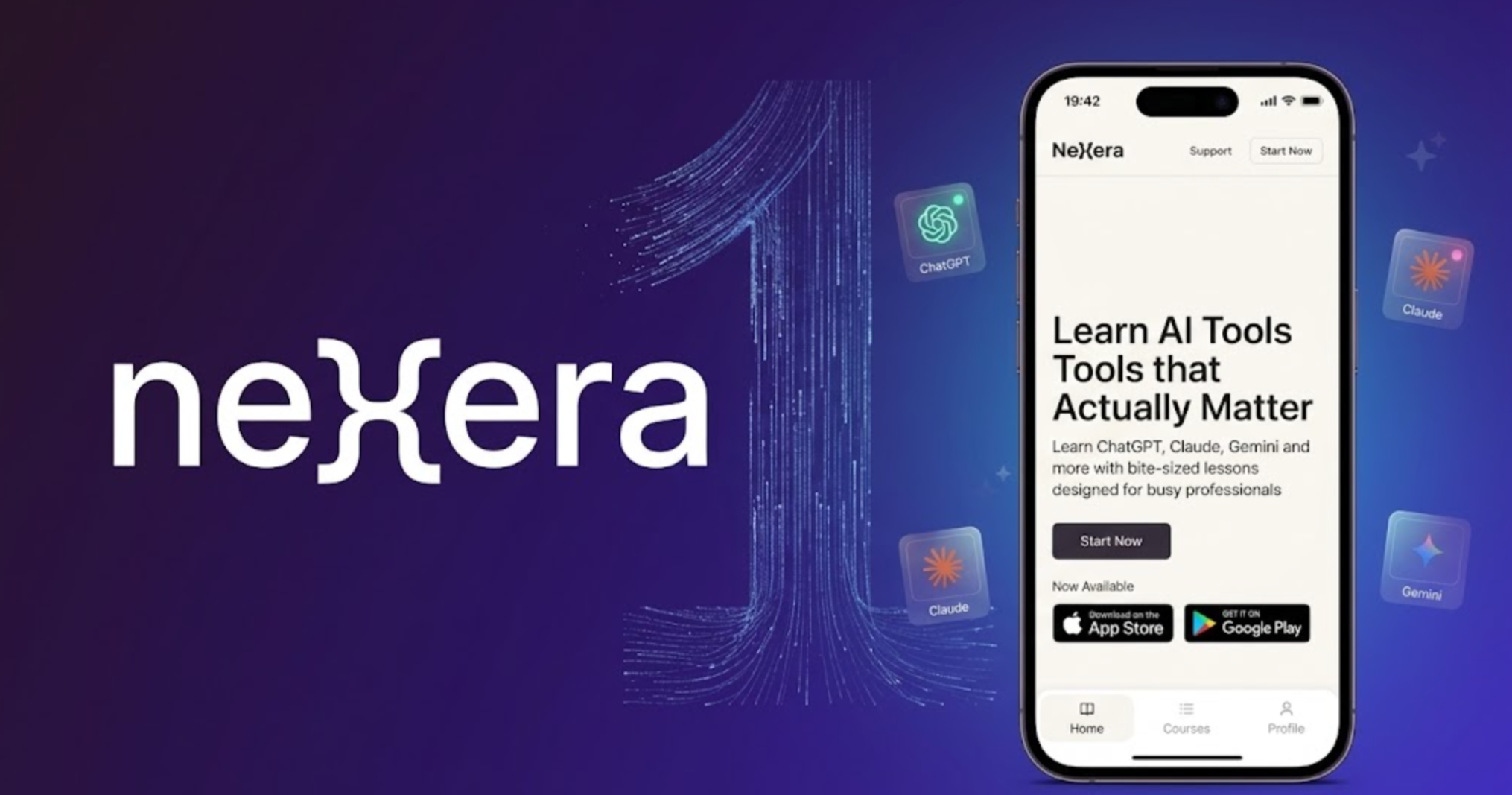
I Spent the First Day Exploring the App
I spent most of the first day looking through the available material rather than trying to complete as many lessons as possible. There are courses around ChatGPT, Claude, AI literacy, design, content creation, filmmaking, and career-related uses of AI, so I wanted to understand what was available before choosing where to start.
What helped was that the lessons are divided into small sections. I didn't have to choose one large course and commit to it immediately. I could look through different topics, start with something familiar, and then move into an area I knew less about.
I began with some of the more familiar AI material before looking at the Claude and broader AI courses. That turned out to be a useful way to approach the app because I could quickly tell which parts were covering things I already knew and which ones were worth spending more time on.
What I Actually Did During the Week
By the second and third days, I stopped treating Nexera like a traditional online course. I wasn't sitting down for a long study session or trying to finish a fixed amount of material every evening. Most of the time, I opened the app when I had a short break and went through a few lessons.
Over the seven days, my use looked something like this:
- I went through lessons connected to ChatGPT and compared them with the way I already use the tool
- I spent time exploring Claude and how it can be used for different types of tasks
- I looked at broader AI topics instead of staying with a single platform
- I tried some of the ready-made prompts from the Prompt Library
- I checked out creative areas such as AI-assisted design and content creation
- I returned to unfinished courses rather than always starting something new
This felt more natural to me than trying to follow a strict daily schedule. The app tracks course progress, so coming back to something I had started earlier wasn't difficult.
There are practical tasks as part of the learning format as well. That matters because reading about an AI tool and actually trying to use it are two different things. I found the material more useful when I could take an idea from a lesson and think about how I would apply it to something I already do.
I Started Exploring More Than Just ChatGPT
This was probably the biggest change for me while using Nexera. Before trying the app, ChatGPT was the tool I automatically thought of whenever I needed AI for something. As I explored more of the lessons, I started paying more attention to the fact that different tools can be useful for different types of work.
Nexera covers tools including Claude, Gemini and Perplexity, along with creative platforms such as Midjourney, Canva, PhotoRoom, Sora and D-ID. There are also tools connected to writing and audio. I didn't try to get comfortable with every platform at once. Instead, I focused on understanding what each one could be useful for and which ones I wanted to explore further.
That gave me a better sense of what was available beyond the tools I already knew. Instead of seeing AI as basically ChatGPT plus a few image generators, I started thinking more about choosing a tool based on the task. For me, that was more useful than trying to memorize features from a long list of platforms.
The Short Lessons Made Daily Use Easier
After a week, the microlearning format was probably the part of the Nexera app I understood best. Some days I had more time and went through several lessons, while on others I only spent a short time in the app. I didn't feel like missing a longer session meant I had fallen behind.
The lessons cover different levels of familiarity with AI, so the experience can vary depending on the topic. Some sections introduce the basics, while others move into practical workflows, prompt engineering, choosing the right AI tool for a task, and exploring platforms you may not have used before. For me, that mix made it easier to move between familiar subjects and areas where I still had something new to explore.
For me, that wasn't a major issue during the first week. If I understood a topic, I could keep moving and spend more time on something less familiar. I preferred that to a course where every module takes an hour and skipping ahead means losing the structure completely.
The Prompt Library also fitted the short-session approach quite well. When I didn't feel like continuing a course, I could look through prompts organized around specific tasks instead. I initially thought I would spend most of my time in the lessons, but the library gave me another reason to open the app without committing to a longer learning session.
What I Took Away From Seven Days
A week with Nexera didn't suddenly make me an advanced AI user, but I wasn't expecting that. The useful part was getting a clearer idea of what I still didn't know and which tools or areas I wanted to explore further.
I also learned that the app makes more sense when I don't treat it as something I need to "finish." There are different directions to follow depending on whether the goal is productivity, content, design, career development, or simply understanding AI better. I found it more useful to move between those areas based on what interested me at the time.
After seven days, I think the Nexera app is best suited to someone who has started using AI but still relies heavily on one or two familiar tools. The lessons gave me some structure without requiring a lot of time at once, while the wider range of tools encouraged me to look beyond what I was already using.
For my first week, that was enough to keep me interested. I came away with a few new things to try and a much longer list of AI tools I actually understood the purpose of, rather than just recognizing their names.